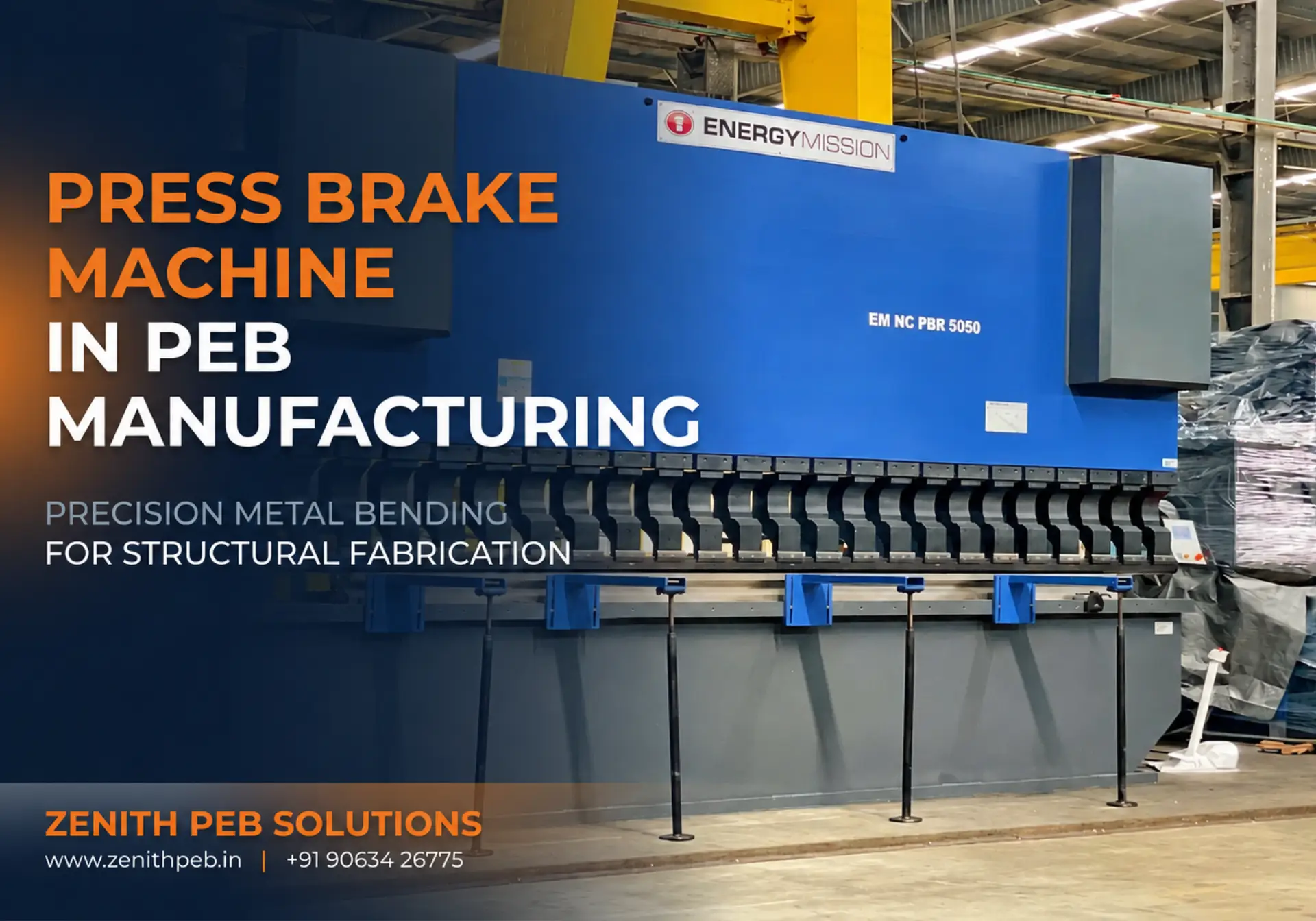
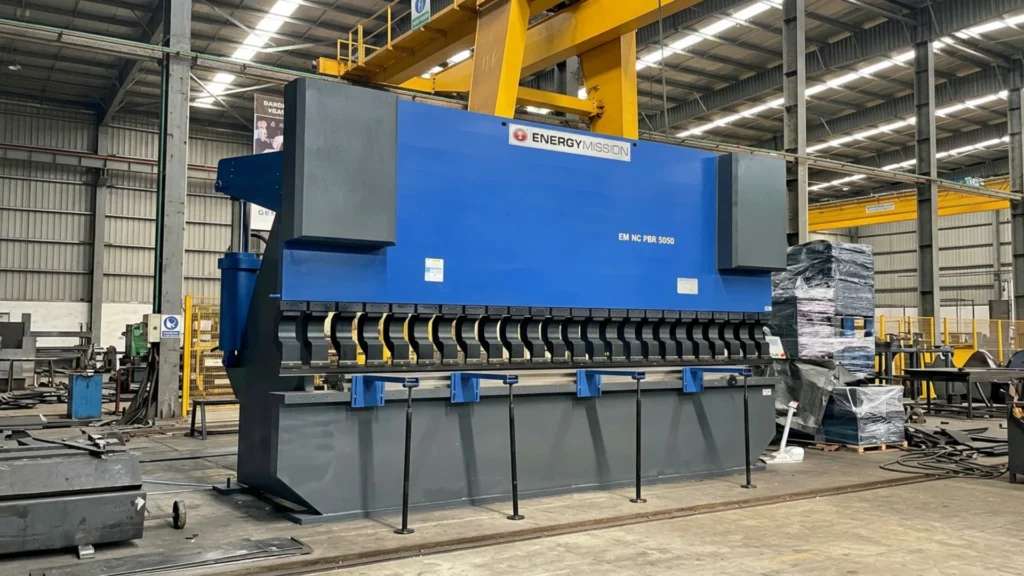
A Press Brake Machine in PEB Manufacturing plays an important role in bending, shaping, and forming sheet metal and steel plates into required fabrication components. It uses controlled force through a punch and die to create precise bends, angles, channels, flanges, and profiles. This process helps manufacturers produce consistent metal components for fabrication, assembly, and industrial building applications.
In modern PEB manufacturing and structural steel fabrication, press brake machines support accurate metal forming, repeatable production, and efficient fabrication workflows. Understanding how this machine works and its applications helps manufacturers select suitable metal-forming processes for their projects.
What Is a Press Brake Machine?
Build with precision. Plan with confidence. Choose the right PEB solution for your business.
How Does a Press Brake Machine Work in PEB Manufacturing?
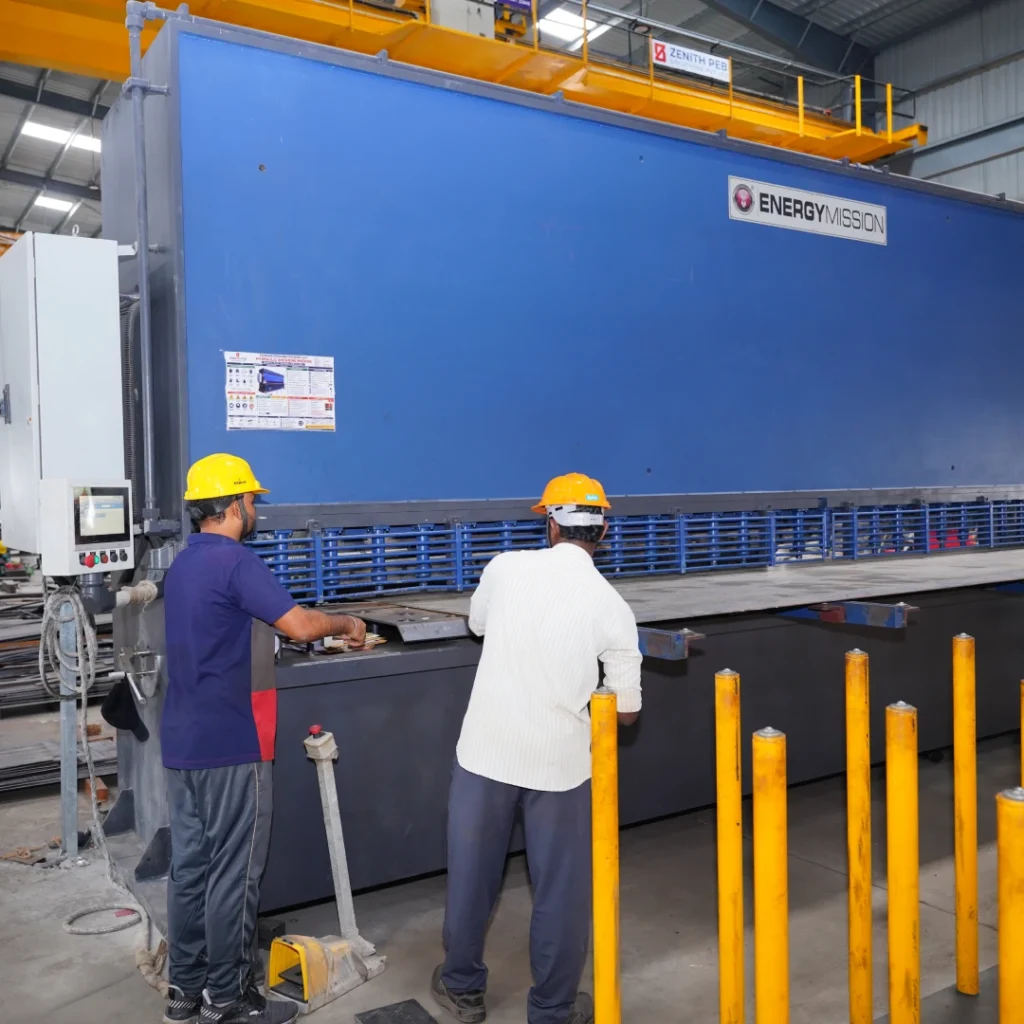
The press brake bending process involves positioning a metal workpiece between the upper punch and lower die. The machine applies force through the ram, causing the material to bend to the required angle.
Understanding the working process of a Press Brake Machine in PEB Manufacturing helps explain how sheet metal is positioned, bent, and inspected during fabrication.
The process generally follows these steps:
- Material Preparation: Steel sheets or plates are prepared according to the required dimensions and fabrication drawings.
- Tooling Selection: The appropriate punch and die are selected based on material thickness, bend geometry, and required angle.
- Workpiece Positioning: The sheet or plate is positioned against the machine’s back gauge to establish the bend location.
- Bending Operation: The ram moves the punch toward the die, applying force to form the material along the specified bending line.
- Component Inspection: The finished bend is checked for angle, dimensions, shape, and consistency with the fabrication requirements.
This controlled process allows manufacturers to create different bend profiles while maintaining repeatability across production batches.
Components Formed Using Press Brake Machines in PEB Manufacturing
A Press Brake Machine in PEB Manufacturing is useful for producing various formed metal parts used in building fabrication and structural assemblies.
- Brackets and Support Components
Metal brackets and supports often require bends to create mounting surfaces, attachment points, or reinforcement shapes. Press brakes help form these components according to specified dimensions.
- Flanges and Folded Edges
Flanges are formed by bending metal edges to create connection surfaces, improve component geometry, or support assembly requirements. Folded edges may also improve stiffness in selected sheet-metal components.
- Channels and Profiles
Press brakes can form sheet metal into channel-shaped and other angular profiles. These components may be used in supports, frames, covers, and other fabricated applications, depending on the project design.
- Panels and Sheet-Metal Components
Metal panels, covers, enclosure parts, and folded sheet-metal components can be produced through press brake operations. These parts are used in various industrial fabrication applications.
- Custom Fabricated Components
PEB projects may involve customised components based on drawings and specifications. Press brake machines allow fabricators to produce different bend angles and shapes by adjusting machine settings and tooling.
Key Benefits of Press Brake Machines in PEB Fabrication
Using a suitable press brake machine can support several aspects of metal fabrication and component manufacturing.
- Accurate Metal Bending
Press brake machines help form steel sheets and plates to specified bend angles and dimensions. Proper tooling, material positioning, and machine settings support consistent fabrication quality.
- Repeatable Component Production
For projects requiring multiple similar parts, press brakes can reproduce programmed or set bending operations. This helps maintain consistency across batches of fabricated components.
- Flexible Component Manufacturing
Different tooling and machine settings allow fabricators to produce a variety of bend profiles, including angles, channels, flanges, and customised shapes.
- Improved Production Efficiency
Press brake operations reduce the need for repeated manual bending methods on suitable components. Efficient setup and production planning can help streamline fabrication workflows.
- Supports Better Assembly
Components formed to the required dimensions and bend angles can help improve fit-up and alignment during subsequent fabrication or assembly operations.
Role of a Press Brake Machine in the PEB Manufacturing Process
A Press Brake Machine in PEB Manufacturing is used during the metal-forming stage of the overall production workflow. Depending on the component and its design, metal may be cut first and then formed through bending operations before moving to further fabrication stages.
The typical manufacturing workflow includes:
- Engineering design and fabrication drawings
- Steel material preparation
- Cutting and blank preparation
- Press brake bending and forming
- Fit-up and welding, where required
- Surface preparation and finishing
- Quality inspection and dispatch
Press brake machines are especially useful where fabricated parts require specific bends, folded edges, channels, or profiles. The required machine capacity, tooling, material thickness, and bending length depend on the component design.
Why Press Brake Technology Matters in Modern Steel Fabrication
Modern PEB manufacturing requires flexible production, dimensional consistency, and efficient fabrication processes. Press brake technology helps manufacturers transform flat metal into useful formed components through controlled bending operations.
From industrial sheds and factory buildings to customised structural and sheet-metal assemblies, press brake machines support the fabrication of components that require defined angles, profiles, and shapes.
When combined with proper engineering drawings, material planning, suitable tooling, and quality inspection, press brake bending contributes to a more organised and efficient manufacturing process.
Conclusion
Overall, a Press Brake Machine in PEB Manufacturing contributes to organised metal-forming operations and consistent fabrication quality.
A Press Brake Machine in PEB Manufacturing plays an important role in bending and forming sheet metal and selected steel plate components into required shapes. It supports the production of brackets, flanges, channels, folded panels, support parts, and customised fabricated components.
Through controlled bending, suitable tooling, and repeatable production settings, press brake machines help improve fabrication consistency, flexibility, and assembly preparation. They remain an important part of modern metal-forming operations used in steel fabrication and industrial construction.
What is a press brake machine used for in PEB manufacturing?
How does a press brake machine bend metal?
What components can be manufactured using a press brake machine?
What is the difference between a press brake and a cutting machine?
What are the benefits of a CNC press brake machine in PEB manufacturing?
Why is press brake bending important in steel fabrication?
Press brake bending helps manufacture components with specified angles and profiles, supporting component fit-up, fabrication consistency, and downstream assembly requirements.